BepiColombo spacecraft completes sixth Mercury flyby in historic mission
 By Priya Raman · · 6 min read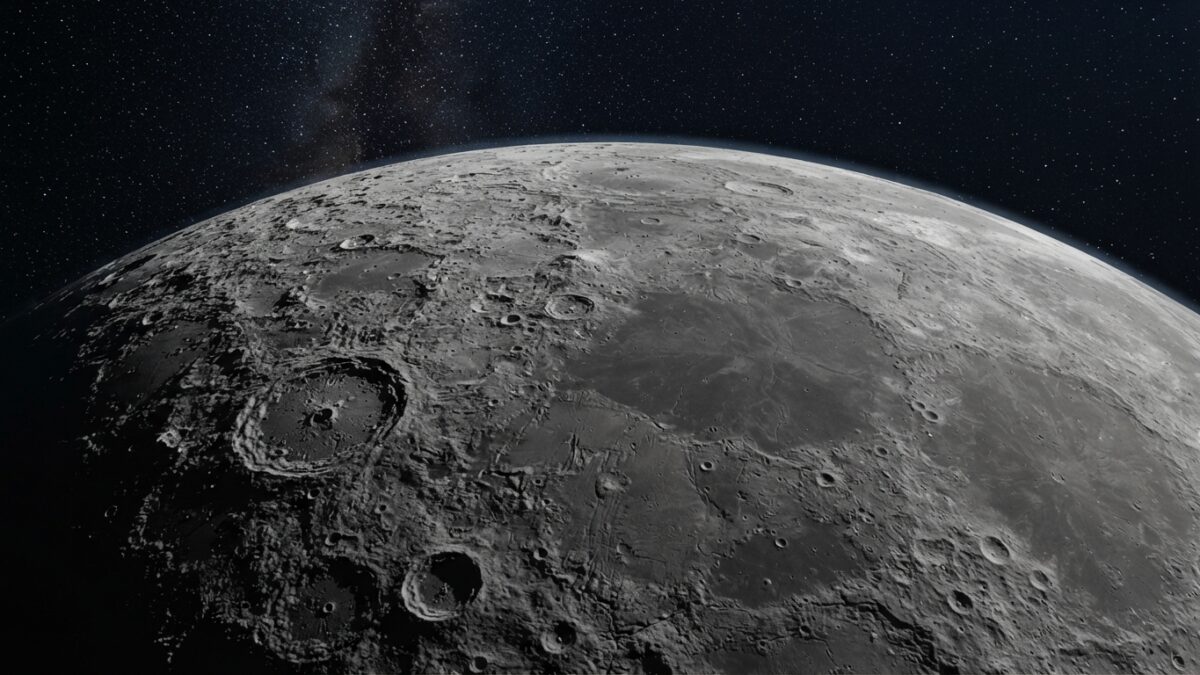
The BepiColombo spacecraft executed its sixth flyby of Mercury on January 8, 2025, swooping within 183 miles of the planet’s scarred surface and capturing detailed images that reveal new geological features on the solar system’s innermost world. The joint European Space Agency and Japan Aerospace Exploration Agency mission continues its complex journey toward becoming only the third spacecraft to orbit Mercury, scheduled for late 2026.
During the encounter, BepiColombo’s monitoring cameras recorded surface details including impact craters, volcanic plains, and the mysterious hollows that distinguish Mercury from other rocky planets. The spacecraft approached the planet’s nightside before emerging into sunlight, documenting terrain that will become targets for intensive study once the mission enters orbit.
Technical challenges of Mercury exploration
Mercury presents extraordinary difficulties for spacecraft operations. The planet’s proximity to the Sun creates extreme thermal environments, with surface temperatures swinging from 800 degrees Fahrenheit on the dayside to minus 290 degrees Fahrenheit in permanent shadow. The intense solar radiation also means spacecraft require specialized heat shields and thermal management systems that add complexity and mass to mission designs.
BepiColombo addresses these challenges through a modular architecture. The mission comprises two orbiters—ESA’s Mercury Planetary Orbiter and JAXA’s Mercury Magnetospheric Orbiter—currently stacked together with a transfer module that provides propulsion. This configuration allows the spacecraft to use solar electric propulsion combined with gravity assists from Earth, Venus, and Mercury itself to gradually reduce its orbital energy.
The spacecraft has completed one Earth flyby, two Venus flybys, and is now working through a series of six Mercury encounters. Each flyby shaves velocity from the spacecraft’s trajectory, bringing it closer to the conditions needed for orbital capture. The final Mercury flyby is scheduled for January 2026, after which the spacecraft will fire its thrusters to enter orbit around the planet.
Scientific objectives and unanswered questions
Mercury remains one of the least understood terrestrial planets despite two previous missions. NASA’s Mariner 10 conducted three flybys in 1974 and 1975, mapping approximately 45 percent of the surface. NASA’s MESSENGER spacecraft, which orbited Mercury from 2011 to 2015, revolutionized understanding of the planet by revealing its global magnetic field, determining its internal structure, and discovering water ice in permanently shadowed polar craters.
BepiColombo aims to build on MESSENGER’s discoveries with more advanced instruments and the advantage of two spacecraft that will observe Mercury simultaneously from different orbital positions. Key scientific questions include the origin and dynamics of Mercury’s magnetic field, which is far weaker than Earth’s but still significant for such a small planet. Understanding this magnetic field could reveal how planetary dynamos operate under different conditions.
The mission will also investigate Mercury’s exosphere, an extremely thin atmosphere composed of atoms blasted from the surface by solar wind and micrometeorite impacts. The composition and behavior of this exosphere provide clues about surface composition and space weathering processes. JAXA’s magnetospheric orbiter will focus on how Mercury’s magnetic field interacts with the intense solar wind, creating a miniature magnetosphere that differs substantially from Earth’s more robust magnetic environment.
Geological mysteries and surface composition
Mercury’s surface bears witness to a violent history. The planet is heavily cratered, recording billions of years of impacts, but also shows evidence of extensive volcanic activity that resurfaced large portions of the world. The volcanic plains differ in composition from those on the Moon, suggesting different internal chemistry and thermal evolution.
Among the most intriguing features are the hollows—irregular, shallow depressions with bright interiors and halos that appear fresh on geological timescales. MESSENGER discovered these features throughout the planet, but their formation mechanism remains unclear. Proposed explanations include sublimation of volatile materials or space weathering processes unique to Mercury’s extreme environment. BepiColombo’s high-resolution spectrometers and cameras will map these features in unprecedented detail.
The planet’s high density also poses questions. Mercury has the largest iron core relative to its size of any planet in the solar system, suggesting either that it formed from unusually metal-rich material or that a giant impact stripped away much of its rocky mantle early in its history. Precise measurements of Mercury’s gravity field and rotational dynamics will help scientists distinguish between these scenarios.
International collaboration and mission timeline
The BepiColombo mission demonstrates the value of international cooperation in planetary science. ESA leads the mission overall, providing the Mercury Planetary Orbiter and the transfer module. JAXA contributes the Mercury Magnetospheric Orbiter and instruments for both spacecraft. The partnership allows both agencies to share costs and risks while combining expertise in spacecraft engineering and scientific instrumentation.
Mission operations are coordinated between ESA’s European Space Operations Centre in Germany and JAXA’s facilities in Japan. The complexity of operating two spacecraft in Mercury orbit while managing thermal extremes and communications delays requires careful planning and robust autonomous systems. Ground controllers must account for the fact that radio signals take between 3 and 13 minutes to travel between Earth and Mercury, depending on planetary positions.
After orbital insertion in late 2026, the mission will spend several months adjusting the orbiters into their final configurations. The Mercury Planetary Orbiter will settle into a polar orbit ranging from 300 to 930 miles altitude, optimized for surface mapping and composition studies. The Mercury Magnetospheric Orbiter will occupy a more elliptical polar orbit extending from 370 to 7,300 miles, ideal for studying the magnetosphere and solar wind interactions.
Data from flyby sequences
While the flybys serve primarily as trajectory-shaping maneuvers, they also provide scientific opportunities. Each encounter allows instruments to collect data during the brief close approach, building a dataset that complements observations from orbit. The monitoring cameras, though lower resolution than the main science cameras that remain sealed until orbit, capture global views that help mission planners identify targets for detailed study.
Spectroscopic measurements during flybys sample the exosphere at different locations and times, revealing how this tenuous atmosphere varies with solar activity and position in Mercury’s eccentric orbit. The planet’s distance from the Sun varies from 29 million miles at closest approach to 43 million miles at its farthest, creating substantial changes in solar heating and radiation pressure that drive exospheric dynamics.
The mission’s remaining Mercury flybys in 2025 and early 2026 will refine trajectory predictions and provide additional opportunities for instrument testing and calibration. Engineers monitor spacecraft health closely during these encounters, as the thermal stress and radiation environment test systems that must operate reliably through at least one Earth year in Mercury orbit, with mission extensions possible if spacecraft and instruments remain functional.
What researchers learn from BepiColombo will inform understanding of how rocky planets form and evolve in different environments. Mercury’s proximity to the Sun makes it an end-member in planetary science, testing theories under extreme conditions that cannot be replicated in laboratories. The mission’s dual-spacecraft architecture and advanced instrument suite promise discoveries that reshape understanding of the solar system’s smallest world.