Trump Orders Pentagon to Scale Back Military Drills with Seoul
 By Priya Raman · · 5 min read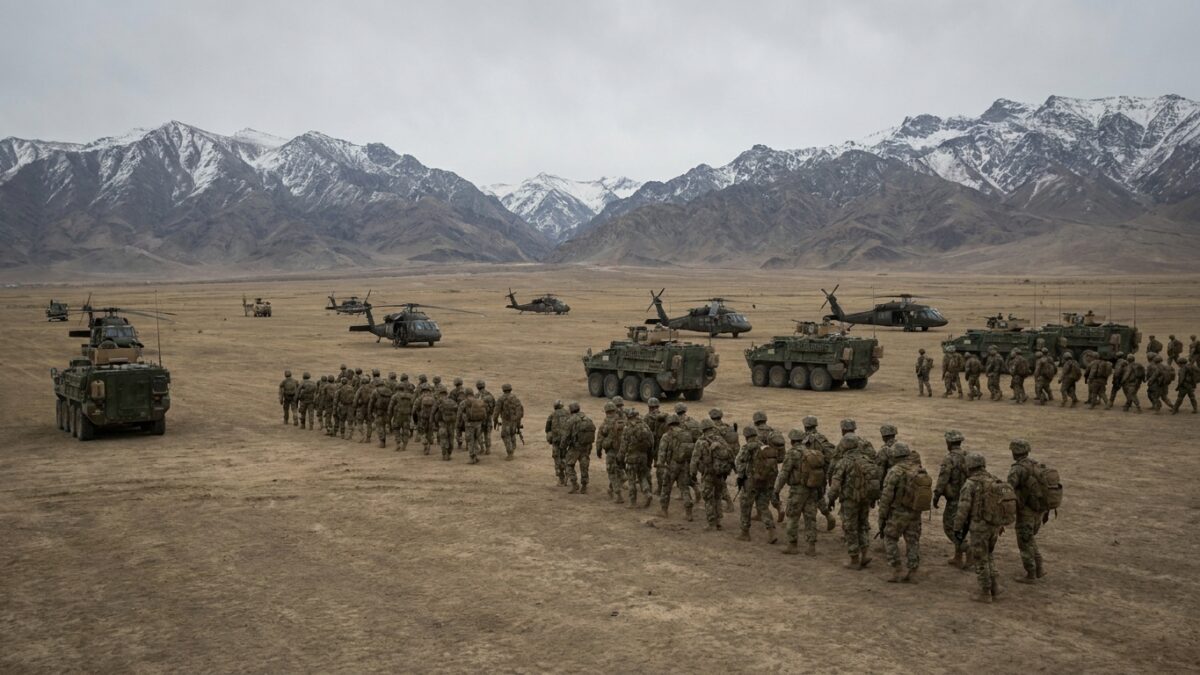
President Donald Trump has directed the Department of Defense to substantially reduce joint military exercises with South Korea, according to official sources familiar with the order. The directive represents a significant recalibration of U.S.-South Korean defense cooperation that has anchored the alliance for more than seven decades.
The order comes without a publicly announced timeframe or specific reduction targets, leaving military planners on both sides of the Pacific scrambling to understand the scope and implementation of the policy shift. Pentagon officials have not yet issued formal guidance to commanders in the Indo-Pacific region.
Decades of Joint Training at Stake
The United States and South Korea have conducted regular joint military exercises since the 1953 armistice that halted the Korean War. These drills, which range from small-scale tactical training to massive multi-week operations involving tens of thousands of troops, serve multiple purposes: maintaining combat readiness, testing interoperability between the two militaries, and demonstrating resolve to potential adversaries.
The largest of these exercises have historically included aerial maneuvers, amphibious landings, and mechanized warfare simulations across the Korean Peninsula. Recent iterations have incorporated cyber defense components and responses to unconventional threats, reflecting evolving security challenges in the region.
Military analysts note that these exercises require months of planning and coordination. A substantial reduction would affect not only the frequency of major drills but potentially the entire training cycle that governs how American and South Korean forces prepare for contingencies.
Strategic Implications Remain Unclear
The administration has not clarified whether the reduction applies to all categories of exercises or targets specific types of operations. Joint drills vary widely in scale, from battalion-level field training to full-scale combined operations involving naval vessels, aircraft squadrons, and ground forces.
Some exercises serve primarily to maintain basic operational coordination between the two militaries. Others explicitly rehearse responses to specific scenarios, including potential aggression from North Korea. Defense experts question whether the reduction will distinguish between these different categories or apply a blanket decrease across all activities.
The United States maintains approximately 28,500 troops in South Korea, stationed at bases including Camp Humphreys, the largest overseas American military installation. These forces depend on regular training with their South Korean counterparts to maintain the integrated defense posture that underpins the alliance.
North Korean Factor Looms Large
Any modification to U.S.-South Korean military exercises inevitably intersects with the broader question of how to manage relations with North Korea. Pyongyang has consistently characterized joint drills as rehearsals for invasion and has used them as justification for its own military programs and provocations.
Previous administrations have temporarily suspended or scaled back certain exercises as diplomatic gestures during negotiations with North Korea. These pauses, however, were typically announced as part of broader diplomatic frameworks and came with explicit expectations of reciprocal actions from Pyongyang.
What remains unclear is whether the current directive connects to any ongoing diplomatic effort or represents an independent policy decision. No corresponding announcement of renewed negotiations with North Korea has been made public.
Alliance Coordination Questions
South Korean officials have not issued detailed public responses to the reported directive, though diplomatic channels between Washington and Seoul are presumably active. The absence of a joint announcement raises questions about whether the decision was made in close consultation with South Korean leadership or presented as a determination already reached.
The U.S.-South Korea alliance operates under a structure of formal agreements and informal understandings built over decades. Major changes to military posture typically involve extensive bilateral discussions at multiple levels, from working groups of military planners to consultations between defense ministers and heads of state.
Defense cooperation between the two countries extends beyond exercises to include intelligence sharing, weapons procurement coordination, and joint development of military technologies. How a reduction in training exercises might affect these other dimensions of the relationship remains to be seen.
Regional Security Architecture
The Indo-Pacific region hosts a complex network of U.S. alliances and partnerships, with South Korea occupying a central position. American forces in South Korea contribute not only to peninsular defense but to broader regional security objectives, including freedom of navigation and deterrence of aggression.
Japan, another key U.S. ally in the region, maintains its own set of joint exercises with American forces. Any perceived weakening of one alliance relationship can affect calculations throughout the region, potentially emboldening adversaries or unsettling partners who depend on American security commitments.
China, which shares a border with North Korea and competes with the United States for regional influence, has traditionally opposed large-scale U.S. military exercises near its periphery. Beijing has not yet commented publicly on the reported directive.
What Comes Next
The Pentagon faces the task of translating a broad directive into specific operational changes. This process will likely involve determining which exercises to cancel, postpone, or modify, and over what timeframe reductions should occur. Military planners will need to assess how to maintain readiness and alliance cohesion while implementing the mandated cuts.
Congressional oversight may also come into play, as legislators with jurisdiction over defense policy and foreign relations seek clarification on the strategic rationale and potential security implications. Defense appropriations and authorization processes provide multiple opportunities for congressional input on military posture decisions.
South Korean domestic politics add another layer of complexity. Public opinion in South Korea regarding the U.S. alliance and military cooperation varies across the political spectrum, and the government in Seoul will need to manage both its relationship with Washington and its own domestic considerations.
The timeline for implementation, the specific categories of exercises affected, and the existence of any conditions for reversing or modifying the reduction all remain to be clarified. What is established is that the order has been issued. What is disputed is whether it enhances or complicates regional security. What is unknown is how allies, adversaries, and partners will respond in the coming weeks and months.