BRICS Summit Opens in India Amid Wars, Shipping Crises, Bloc Unity Questions
 By Priya Raman · · 5 min read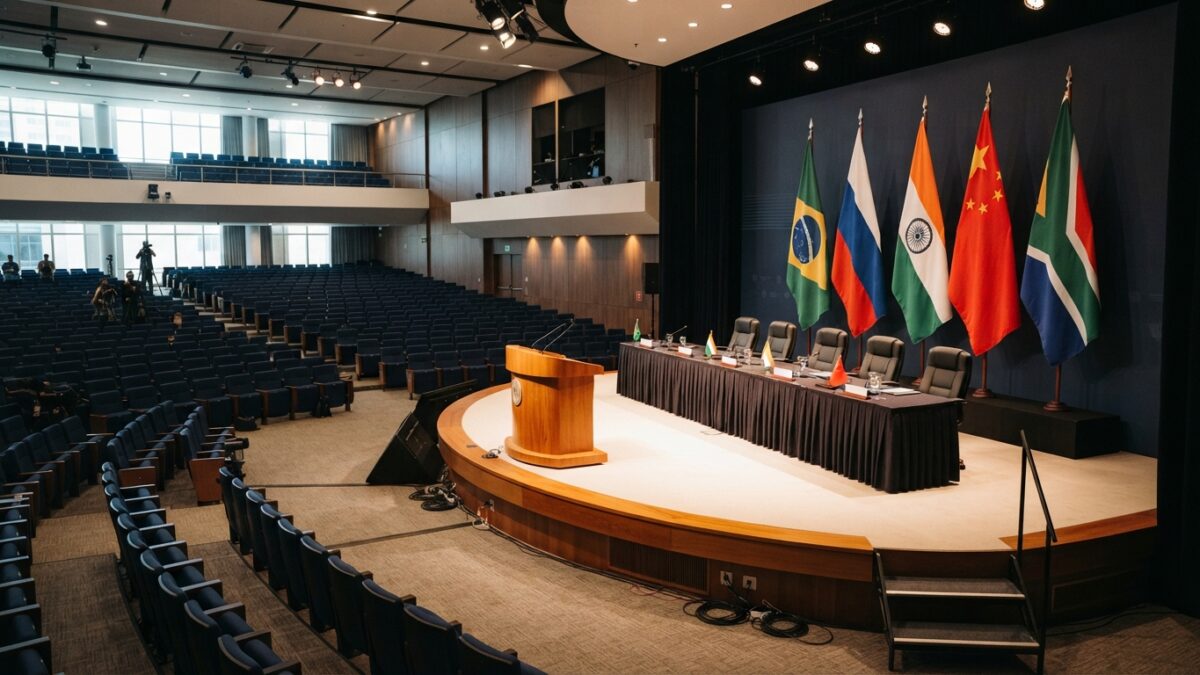
Leaders of the BRICS nations convened in India on Saturday as the economic and political bloc faces its most severe test since its expansion, with simultaneous conflicts threatening global shipping and growing questions about whether divergent national interests can sustain collective action.
The summit opened against a backdrop of escalating violence in Yemen, where Houthi forces have advanced along the Red Sea coast, forcing nearly 50,000 civilians to flee and threatening one of the world’s most critical maritime chokepoints. The situation has already prompted the closure of a major Saudi oil pipeline following targeted attacks, creating immediate pressure on energy markets and supply chains.
Dual Shipping Route Disruptions Strain Global Commerce
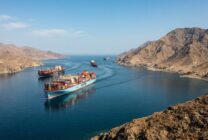
The timing of the BRICS gathering coincides with what analysts describe as an unprecedented dual disruption to global shipping. Iranian-aligned forces and Houthi militants have effectively blocked or severely impeded traffic through two vital waterways: the Strait of Hormuz and the Bab el-Mandeb strait at the southern entrance to the Red Sea.
These two passages handle approximately 30 percent of global seaborne oil shipments and represent critical arteries for trade between Asia, Europe, and the Middle East. The simultaneous pressure on both routes has sent insurance premiums for tanker traffic soaring and forced shipping companies to consider lengthy diversions around the African continent, adding weeks to transit times and substantial costs to global supply chains.
Saudi Arabia confirmed that attacks on its East-West pipeline, which carries crude from oil fields to Red Sea export terminals, have forced a temporary shutdown of the infrastructure. The pipeline serves as an alternative route that bypasses the Strait of Hormuz, meaning its closure compounds the maritime disruptions.
BRICS Divisions Surface on Regional Conflicts
The crisis exposes fundamental divisions within BRICS itself. Russia and China have maintained closer diplomatic ties with Iran, which supports the Houthi forces in Yemen, while India relies heavily on Gulf energy imports and has cultivated security partnerships with Saudi Arabia and the United Arab Emirates. South Africa has traditionally advocated for mediation and peacekeeping approaches, while Brazil has focused primarily on economic rather than security dimensions of BRICS cooperation.
These divergent interests have complicated efforts to present a unified BRICS position on the Yemen conflict or the shipping disruptions. Indian officials hosting the summit have emphasized economic cooperation and development finance, steering discussions away from the security crises that dominate headlines but reveal the bloc’s limited capacity for coordinated foreign policy.
The BRICS grouping, which represents roughly 40 percent of the world’s population and a quarter of global GDP, has long positioned itself as an alternative center of gravity in global governance, challenging Western-dominated institutions. Yet the current crises test whether the bloc can move beyond rhetorical solidarity to substantive collective action on pressing international challenges.
Energy Markets React to Supply Uncertainties
Oil markets have responded to the dual disruptions with significant volatility. Benchmark crude prices have climbed as traders price in the risk of prolonged supply constraints from the Middle East, which produces approximately one-third of global petroleum. The situation has particular implications for major importers including China and India, both BRICS members with rapidly growing energy needs.
European nations, still managing energy security concerns following disruptions to Russian gas supplies in previous years, face renewed vulnerability to Middle Eastern supply shocks. The United States, now a net energy exporter, has different interests but remains exposed through its military commitments in the Gulf region and the economic impact of global price increases.
Industry analysts note that the current disruptions arrive during a period when global oil inventories remain below historical averages and spare production capacity among major producers has tightened. This leaves less cushion to absorb supply shocks compared to previous regional conflicts.
Humanitarian Crisis Deepens Along Yemeni Coast
The Houthi advance along the Red Sea coastal areas has triggered a fresh wave of displacement in Yemen’s long-running conflict. International relief organizations report that nearly 50,000 civilians have fled fighting in recent days, adding to the millions already displaced by nearly a decade of war.
The humanitarian situation complicates international responses, as military actions to protect shipping lanes risk exacerbating civilian suffering. Aid deliveries to Yemen itself depend partly on the same maritime routes now under threat, creating a feedback loop where security measures could worsen the underlying crisis driving the conflict.
US Tensions Add Pressure to BRICS Cohesion
The gathering in India unfolds as relations between BRICS members and Washington show varying degrees of strain. Trade tensions, technology restrictions, and competing visions for international institutions have created friction, though the intensity differs significantly across the five nations.
India, despite its BRICS membership, has deepened security cooperation with the United States through frameworks like the Quad partnership with Japan and Australia. This dual alignment illustrates the complex positioning of BRICS members, which maintain the grouping while pursuing sometimes contradictory bilateral relationships.
China and Russia have aligned more explicitly in opposition to what they characterize as US hegemony, while Brazil and South Africa have adopted more nuanced positions that emphasize multilateralism and reform of existing institutions rather than wholesale rejection of the current order.
What Remains Uncertain
Several critical questions remain unresolved as the summit continues. Whether BRICS members can agree on any statement addressing the Yemen conflict and shipping disruptions will signal the bloc’s coherence on security matters. The trajectory of the Houthi offensive and potential military responses from Gulf states or their allies could rapidly escalate or de-escalate current tensions.
How long the Saudi pipeline remains offline and whether additional energy infrastructure faces targeting will determine the extent of market disruption. The duration of shipping route impediments and whether major maritime nations commit naval resources to secure passage will shape global trade patterns in coming months.
The summit’s outcomes on economic cooperation, including progress on the proposed BRICS currency for trade settlement and expansion of the New Development Bank, will indicate whether the bloc can advance its core agenda despite the surrounding geopolitical turbulence.