Diesel Prices Approach $6 Per Gallon as Energy Markets Tighten
 By Priya Raman · · 5 min read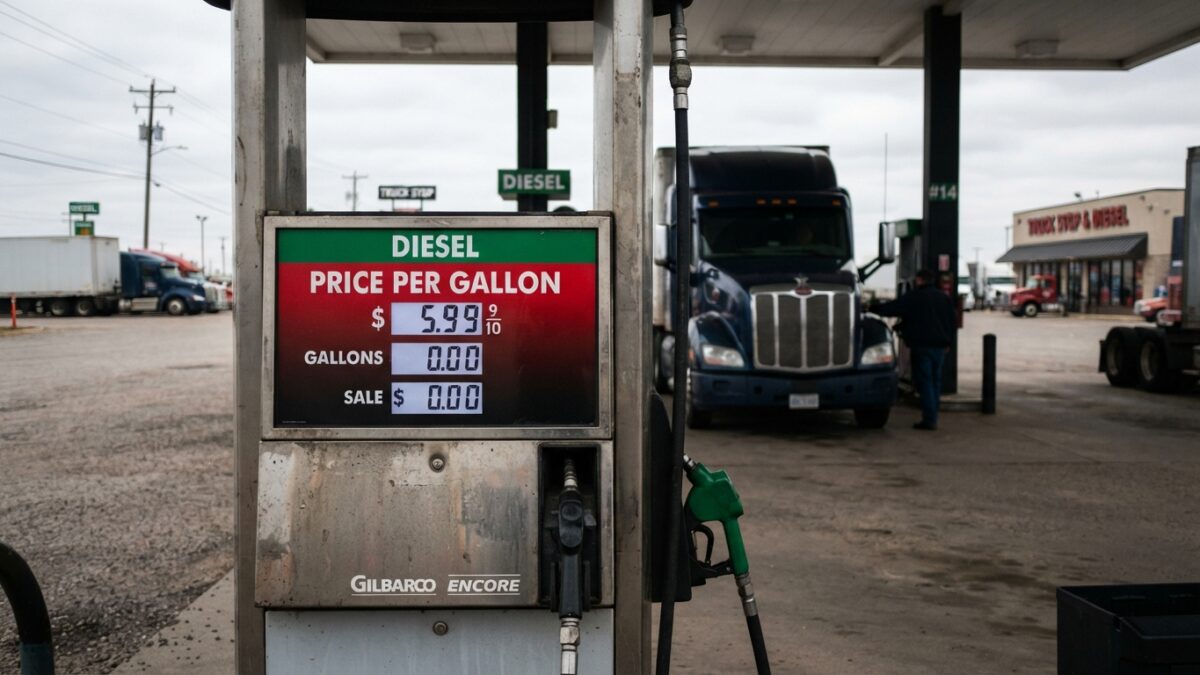
Diesel prices across the United States are approaching $6 per gallon, a threshold never before reached in the fuel’s commercial history. The surge comes as global energy markets tighten and domestic refining capacity struggles to meet demand, creating ripple effects throughout the economy that touch everything from grocery prices to shipping costs.
The national average for diesel currently hovers near record territory, with some regions already exceeding $5.50 per gallon. This marks a significant increase from previous peaks and represents a fundamental challenge for an economy heavily dependent on diesel-powered trucks to move goods across the country.
Why Diesel Matters More Than Gasoline
While gasoline prices typically capture public attention, diesel fuel serves as the backbone of the American economy in ways that regular motorists rarely consider. Nearly all freight movement across the country relies on diesel trucks. Construction equipment, farm machinery, delivery vans, and marine vessels overwhelmingly run on diesel fuel.
The transportation sector accounts for approximately 75 percent of all diesel consumption in the United States. When diesel prices rise, those costs inevitably filter through supply chains, appearing as higher prices on store shelves weeks or months later. Unlike gasoline price spikes that primarily affect household budgets directly, diesel increases function as an economic multiplier.
Farmers particularly feel the impact during planting and harvest seasons when tractors, combines, and irrigation pumps consume diesel in large quantities. Construction projects face similar pressures, with bulldozers, cranes, and generators requiring steady fuel supplies. These sectors typically operate on tight margins, making fuel cost fluctuations significant business challenges.
Supply Constraints Behind the Surge
Several factors have converged to push diesel prices toward unprecedented levels. Refining capacity remains constrained following pandemic-era closures and reduced investment in fossil fuel infrastructure. Unlike crude oil production, which has rebounded substantially, refinery capacity has not kept pace with recovering demand.
The United States lost several refineries permanently during the economic disruptions of recent years. Converting crude oil into diesel requires specific refining processes and equipment, creating bottlenecks even when crude supplies appear adequate. Maintenance issues at remaining facilities have further tightened available supply.
Global dynamics compound domestic challenges. European demand for diesel increased as countries sought alternatives to Russian energy supplies. This international competition for refined products has kept American diesel from flowing as freely into domestic markets as might otherwise occur. Export demand pulls fuel away from local pumps when price differentials favor overseas sales.
Inventory levels for diesel fuel have fallen below historical averages for this time of year. Days of supply, a key metric tracking how long current stockpiles would last at current consumption rates, show concerning declines. Lower inventories reduce cushions against unexpected disruptions and tend to amplify price volatility.
Regional Variations and Hardest-Hit Areas
Diesel prices vary considerably across the country based on local supply infrastructure, state taxes, and regional demand patterns. West Coast states typically experience the highest prices due to stricter fuel specifications and relative isolation from major refining centers. California diesel prices have led the nation in reaching toward the $6 threshold.
Northeastern states face similar pressures from limited local refining capacity and dependence on fuel deliveries from Gulf Coast facilities. Transportation costs to move diesel northward add to the final pump price. Cold weather demands for heating oil, which shares similar refining processes with diesel, can create additional seasonal pressure in these regions.
Rural areas dependent on agricultural operations face acute challenges despite sometimes lower base prices. Farming communities consume diesel in disproportionate quantities, making price increases particularly burdensome. These regions also tend to have fewer fuel retailers, reducing competitive pressure on pricing.
Economic Implications Beyond the Pump
The approaching $6 diesel price carries implications that extend well beyond fuel stations. Transportation companies face difficult decisions about whether to absorb costs, raise shipping rates, or reduce services. Many trucking firms operate as small businesses with limited ability to weather sustained fuel price spikes.
Shipping rate increases typically lag behind fuel cost spikes as contracts get renegotiated and competitive dynamics play out. This delay means transportation companies often absorb losses initially before passing costs forward. Small operators may exit the market entirely if margins become unsustainable, potentially creating service gaps.
Consumer prices for transported goods will likely reflect diesel cost increases in coming months. Food prices remain particularly sensitive since agricultural production and distribution both depend heavily on diesel. Construction costs may rise as contractors factor higher equipment operating expenses into project bids.
Inflation metrics could face renewed pressure if diesel prices remain elevated. Transportation costs feed into core inflation calculations and affect nearly every category of consumer spending. Federal Reserve policy decisions may need to account for energy-driven price pressures even as the central bank attempts to slow economic activity.
Limited Relief Options on the Horizon
Few immediate solutions exist to address diesel supply constraints. Building new refining capacity requires years of planning and construction, making it irrelevant for current price pressures. Existing refineries already operate near maximum capacity during most periods, leaving little room for increased output.
Strategic petroleum reserve releases focus primarily on crude oil rather than refined products like diesel. While crude releases can indirectly help by ensuring refineries have adequate feedstock, they do not directly address refining bottlenecks or product-specific shortages.
Demand destruction represents the market mechanism most likely to eventually pressure prices downward. If diesel costs become sufficiently high, economic activity requiring diesel fuel would slow, reducing demand until prices stabilize. This process, however, comes with obvious economic pain as the mechanism through which balance returns.
Weather patterns and geopolitical developments remain wild cards. An unusually mild winter could reduce heating oil demand and free refining capacity for diesel production. Conversely, hurricanes affecting Gulf Coast refineries or international supply disruptions could push prices even higher. The diesel market remains vulnerable to shocks given tight supply conditions and limited spare capacity throughout the system.