Deadly floods at Nepal-Tibet border leave dozens dead or missing
 By Priya Raman · · 5 min read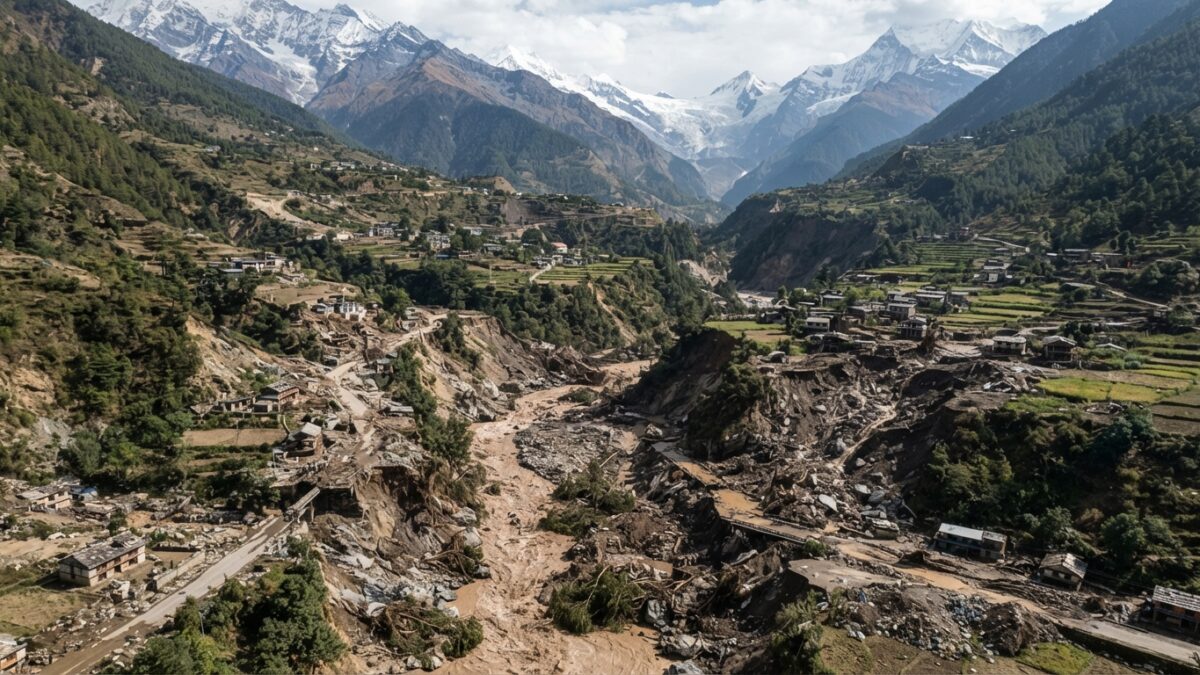
A catastrophic flood originating from a glacial lake outburst in Tibet has killed at least 60 people in Nepal, with dozens more reported missing as rescue operations continue in the mountainous border region. The disaster struck without warning in the early hours, overwhelming communities downstream and raising urgent questions about glacial lake monitoring systems in the Himalayas.
The flood began when a glacial lake in Tibet breached its natural dam, sending a massive wall of water and debris cascading down valleys that span both Chinese and Nepalese territory. Local authorities report that the surge reached heights of up to 15 meters in some narrow valleys, sweeping away homes, bridges, and infrastructure in its path.
Scale of destruction emerges
Nepalese officials have confirmed at least 60 deaths, though that number is expected to rise as rescue teams reach more remote areas. An additional 80 people remain unaccounted for, according to statements from district administrators in the affected regions. The flood primarily impacted settlements in the northern districts bordering the Tibetan Autonomous Region.
Survivors described hearing a roaring sound before a massive surge of water mixed with rocks and mud descended on their villages. Many residents had no time to gather belongings or warn neighbors before the floodwaters arrived. The timing, in the early morning hours, meant most people were sleeping when disaster struck.
Infrastructure damage is extensive. At least five major bridges have been destroyed or rendered unusable, cutting off road access to several mountain communities. This has complicated rescue efforts and left thousands of people stranded without regular supply routes. Helicopter evacuations have been launched for the most critically isolated areas.
Glacial lake outburst floods explained
Glacial lake outburst floods, known by the acronym GLOF, occur when water accumulated behind natural dams formed by glacial moraines or ice suddenly releases. These events have become increasingly common in the Himalayan region as rising temperatures accelerate glacial melting.
Scientific research has documented thousands of glacial lakes forming or expanding across the Himalayas over recent decades. Many of these lakes sit precariously behind unstable natural barriers of rock and ice debris. When these barriers fail, whether from accumulated water pressure, seismic activity, or structural weakness, the results can be devastating for downstream populations.
The Nepal-Tibet border region is particularly vulnerable. The area contains numerous high-altitude glacial lakes, many of which have grown substantially in recent years. Previous GLOF events in the region have caused significant casualties and property damage, though none in recent memory match the scale of the current disaster.
International response mobilizes
Nepal’s government has declared a state of emergency in the affected districts and mobilized military units to support search and rescue operations. Teams are working to locate survivors, recover bodies, and establish emergency supply lines to cut-off communities.
International aid organizations have begun coordinating relief efforts. Humanitarian groups are preparing to deliver emergency supplies including food, clean water, medical equipment, and temporary shelter materials. The mountainous terrain and damaged infrastructure present significant logistical challenges for aid delivery.
Chinese authorities in Tibet have not released detailed information about conditions on their side of the border, though state media have acknowledged the glacial lake breach. Cross-border coordination on disaster response remains limited due to diplomatic and administrative barriers between the two regions.
Warning systems under scrutiny
The disaster has renewed focus on early warning systems for glacial lake hazards in the Himalayas. While some monitoring programs exist, coverage remains incomplete and many vulnerable communities lack access to timely alerts.
Scientists have identified hundreds of potentially dangerous glacial lakes across Nepal, Tibet, Bhutan, and northern India. However, continuous monitoring of these lakes requires significant resources and technical infrastructure that many regional governments struggle to maintain consistently.
Some communities in high-risk areas have established local monitoring systems, training residents to watch for warning signs like unusual water levels or sounds from upstream glacial lakes. These grassroots efforts have saved lives in past incidents, but their effectiveness depends heavily on time of day and lake location relative to settlements.
Climate connection debated
While individual extreme weather events cannot be directly attributed to climate change without detailed analysis, the broader pattern of increasing glacial lake hazards in the Himalayas aligns with documented warming trends in the region.
Temperature increases in high mountain areas of the Himalayas have outpaced global averages over recent decades. This accelerated warming drives faster glacial retreat and increased meltwater accumulation in newly formed or expanding glacial lakes. Research published in recent years has warned that GLOF risks will continue to increase without significant adaptation measures.
The economic and human costs of these disasters fall disproportionately on some of the world’s poorest and most marginalized communities. Mountain populations often have limited resources for disaster preparedness or recovery, and government support may be slow to reach remote areas.
What remains unknown
Rescue teams continue searching for missing persons, though hopes of finding additional survivors diminish with each passing day. The full extent of infrastructure damage is still being assessed as teams reach previously inaccessible areas.
The specific glacial lake that failed has not been officially identified in public reports, though geographical clues point to several candidates in the border region. Understanding which lake breached and why could provide valuable information for assessing risks at similar sites.
Casualty figures remain preliminary. Remote mountain communities may have experienced losses that have not yet been reported to authorities. Communication infrastructure damage has made it difficult to get complete information from all affected areas.
Long-term questions about reconstruction, disaster risk reduction, and climate adaptation in the region await answers as immediate rescue priorities take precedence.