Skin Cancer Remains Most Common Yet Frequently Overlooked Malignancy
 By Priya Raman · · 3 min read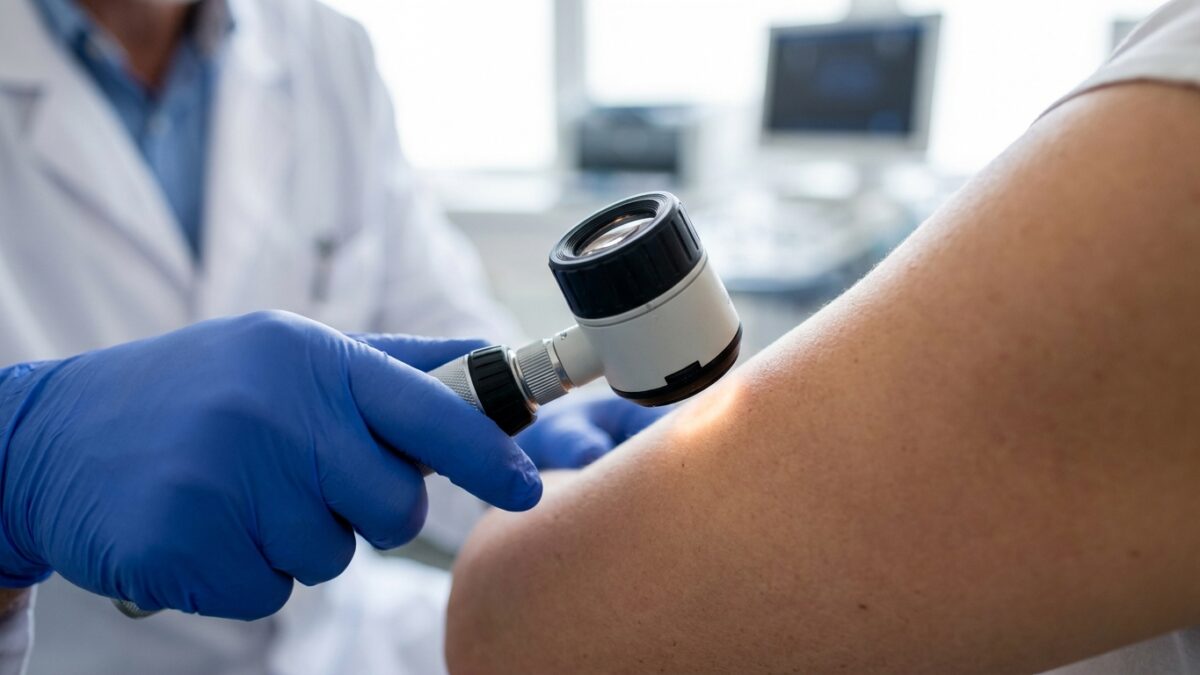
Skin cancer represents the most frequently diagnosed cancer in the United States, yet medical professionals emphasize that early warning signs frequently go unnoticed by patients and sometimes even during routine examinations. This combination of high prevalence and delayed detection creates a significant public health challenge.
The disease encompasses several types, with basal cell carcinoma and squamous cell carcinoma being the most common forms, while melanoma remains the deadliest variant. Early identification significantly improves treatment outcomes across all categories.
Recognition Challenges in Early Stages
Many skin cancers develop gradually and can resemble benign skin conditions, making them easy to dismiss. Basal cell carcinomas may appear as small, shiny bumps or pale patches that patients mistake for ordinary skin irritations. Squamous cell carcinomas often manifest as scaly red patches or elevated growths with a central depression.
Melanomas present additional complexity because they can develop from existing moles or appear as new spots. The challenge lies in distinguishing normal skin changes from potentially dangerous lesions, particularly in areas not regularly visible to the individual.
Critical Warning Signs
Dermatologists recommend attention to specific characteristics when examining skin. For melanoma detection, the ABCDE rule provides a framework: Asymmetry, Border irregularity, Color variation, Diameter larger than a pencil eraser, and Evolution or change over time.
Other concerning features include:
- Sores that fail to heal within several weeks
- Spots that bleed, ooze, or become crusty repeatedly
- Growths with raised borders and indented centers
- Patches that feel rough or scaly to the touch
- New growths appearing after age 40
Non-melanoma skin cancers may not follow these patterns precisely, which contributes to their being overlooked. A persistent spot that differs from surrounding skin warrants professional evaluation regardless of whether it matches typical descriptions.
High-Risk Areas and Populations
Certain body locations receive insufficient attention during self-examinations. The scalp, ears, back, and areas between toes represent common sites where cancers develop undetected. For individuals with darker skin tones, melanomas more frequently appear on palms, soles, and beneath nails—locations that may not receive regular scrutiny.
People with extensive sun exposure history, fair complexion, family history of skin cancer, or a large number of moles face elevated risk. However, skin cancer can affect anyone regardless of skin tone or sun exposure patterns.
The Screening Gap
Despite recommendations for regular skin checks, many individuals never receive professional skin examinations. Primary care visits typically focus on immediate health concerns rather than comprehensive skin assessment. Full-body skin examinations by dermatologists remain underutilized even among high-risk populations.
Self-examination represents a critical component of early detection, yet many people lack familiarity with their own skin patterns or what constitutes an abnormal change. Regular self-checks in good lighting, using mirrors to view difficult areas, establish a baseline for identifying new or changing lesions.
When to Seek Medical Evaluation
Any new growth, changing existing spot, or non-healing sore lasting more than four weeks merits professional assessment. Patients should not wait for symptoms like pain or itching, as early skin cancers often produce no discomfort.
Dermatologists can perform visual examinations and, when necessary, biopsies to determine whether suspicious areas require treatment. Many skin cancers caught early require only minor office procedures for complete removal.
The gap between skin cancer’s prevalence and detection rates underscores the importance of both public awareness and routine screening. While prevention through sun protection remains ideal, recognizing suspicious changes remains the most effective strategy for reducing serious outcomes from this common disease.